How Cloud HR Systems Improve Organizational Culture
2026-01-15
Digital transformation and the growing adoption of flexible work arrangements are fundamentally reshaping how organizations operate, how employees work, and how teams communicate. HR systems have become an essential enabler of healthy organizational cultures built on transparency and autonomy. Cloud-based HR systems in particular play a significant role in supporting flexible working environments unconstrained by location or time — and in strengthening a culture of horizontal collaboration grounded in mutual trust.
This article explores the positive impact that cloud-based HR systems have on organizational culture, and the key factors to consider when selecting and implementing one.
The Positive Effects of Cloud-Based HR Systems on Organizational Culture
1. Cultivating an Autonomous, Trust-Based Work Environment
Cloud-based attendance management systems flexibly support a wide range of flexible work arrangements — including selective working hour schemes, staggered clock-in/clock-out schedules, and remote work. Employees can register their own work schedules and view their clock-in/clock-out records in real time via mobile or web, which significantly improves the transparency of working hour information. This environment strengthens employee autonomy and helps establish a culture of accountability grounded in trust between employees and managers.
Research from the Federation of Korean Industries supports this: among employees using flexible work arrangements, 77.0% reported a positive impact on work performance and productivity, and 66.6% said it was effective in reducing unnecessary overtime. This demonstrates that an environment built on autonomy and transparency translates into real gains in operational efficiency — and cloud-based HR systems play a central role in sustaining that environment.
💡 Source: Federation of Korean Industries, “Employee Awareness Survey on Flexible Work Arrangements,” 2024
2. Strengthening a Culture of Horizontal Collaboration
Cloud-based systems empower employees to plan and execute their own work schedules — placing ownership of work in individuals' hands and actively reshaping organizational culture. Managers and employees can communicate in real time, align on schedules, and collaborate more effectively. This shift moves organizations away from traditional top-down decision-making and toward a culture of horizontal collaboration where decisions are made through genuine feedback and dialogue. The impact extends beyond how people work — it improves the broader communication dynamic and trust relationships across the organization.
3. Embedding Data-Driven HR Management
Cloud-based HR systems automatically collect and accumulate a wide range of data — including working hours, focused work hours, overtime history, and leave usage. HR managers can use this data to generate weekly and monthly reports, as well as customized statistics by department or team, enabling performance evaluations and HR decisions grounded in objective criteria.
By visualizing individual work patterns and using the results as feedback material, organizations can move away from one-sided evaluations and toward an HR culture built on mutual trust. Data-driven HR management is an important tool for simultaneously improving fairness and transparency — raising organizational trust to a higher level.
Key Considerations When Adopting a Cloud-Based HR System
To maximize the positive effects outlined above, the following factors warrant careful consideration during the adoption process.
- Alignment with flexible work arrangements: Verify that the system integrates well with the work arrangements currently in operation — including selective working hour schemes and staggered clock-in/clock-out schedules. It is important to confirm that the system can be configured flexibly to match the organization's actual working practices.
- Compatibility with existing collaboration tools: Considering whether the system integrates with collaboration tools already in use — such as electronic approval workflows and shared calendars — will improve communication among employees and amplify the benefits of adoption.
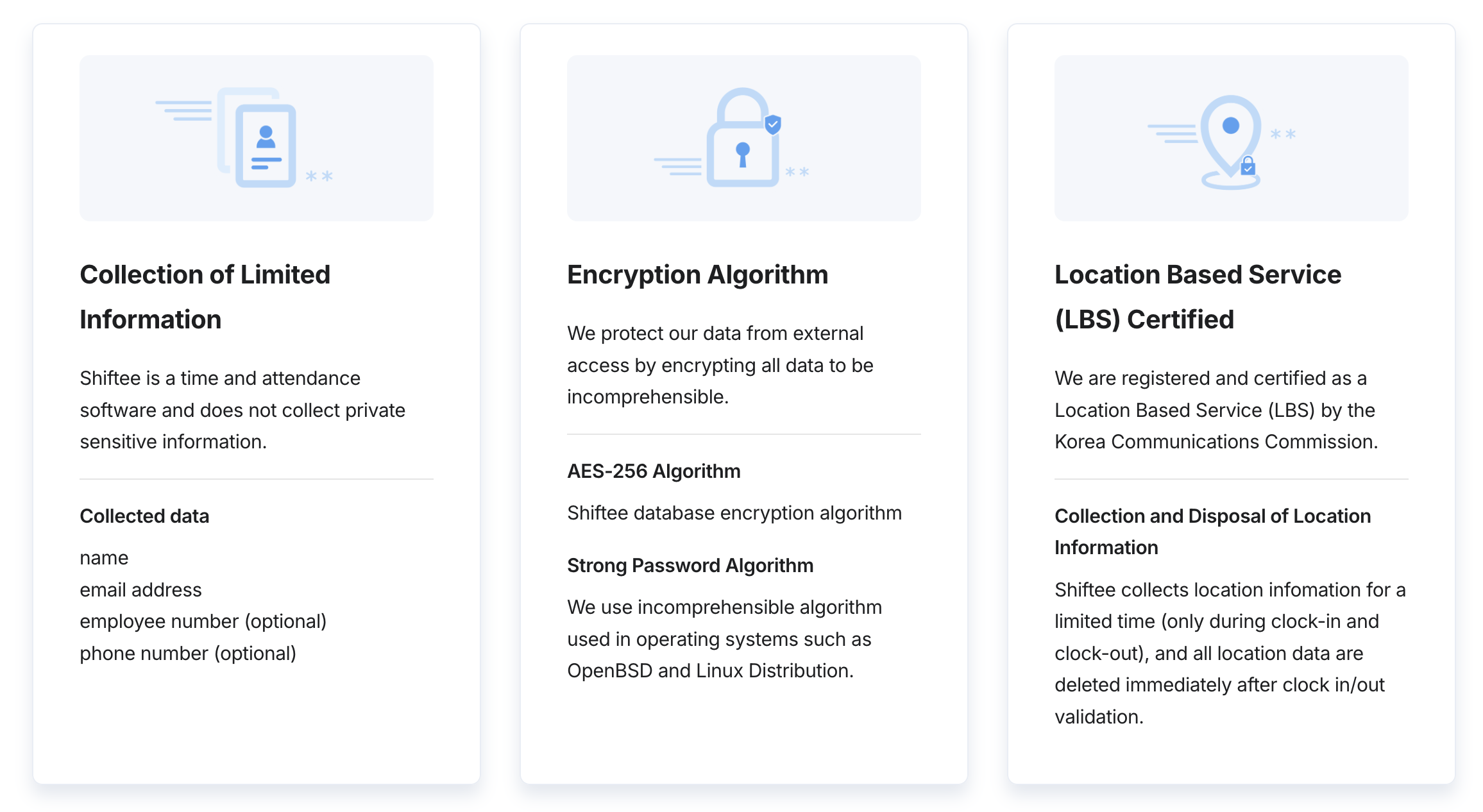
- Security and personal data protection standards: Attendance data is sensitive information. A solution with a certified security framework and robust data protection measures must be selected.
- Usability for both administrators and employees: Confirm that the system offers an intuitive UI/UX accessible to users regardless of their digital proficiency, and that it operates smoothly in mobile environments.
- Scalability: The solution's ability to expand its functionality flexibly as the organization grows and HR policies evolve is an equally important criterion.
Thoroughly reviewing these factors before proceeding with adoption will help realize not only the system's operational efficiency gains, but also the positive cultural shifts it can bring about within the organization.
Shiftee's Features and Security Framework
Shiftee is a leading cloud-based HR platform in Korea, offering integrated management across HR operations — including attendance management, workforce management, leave management, electronic approval workflows, reports, and security.
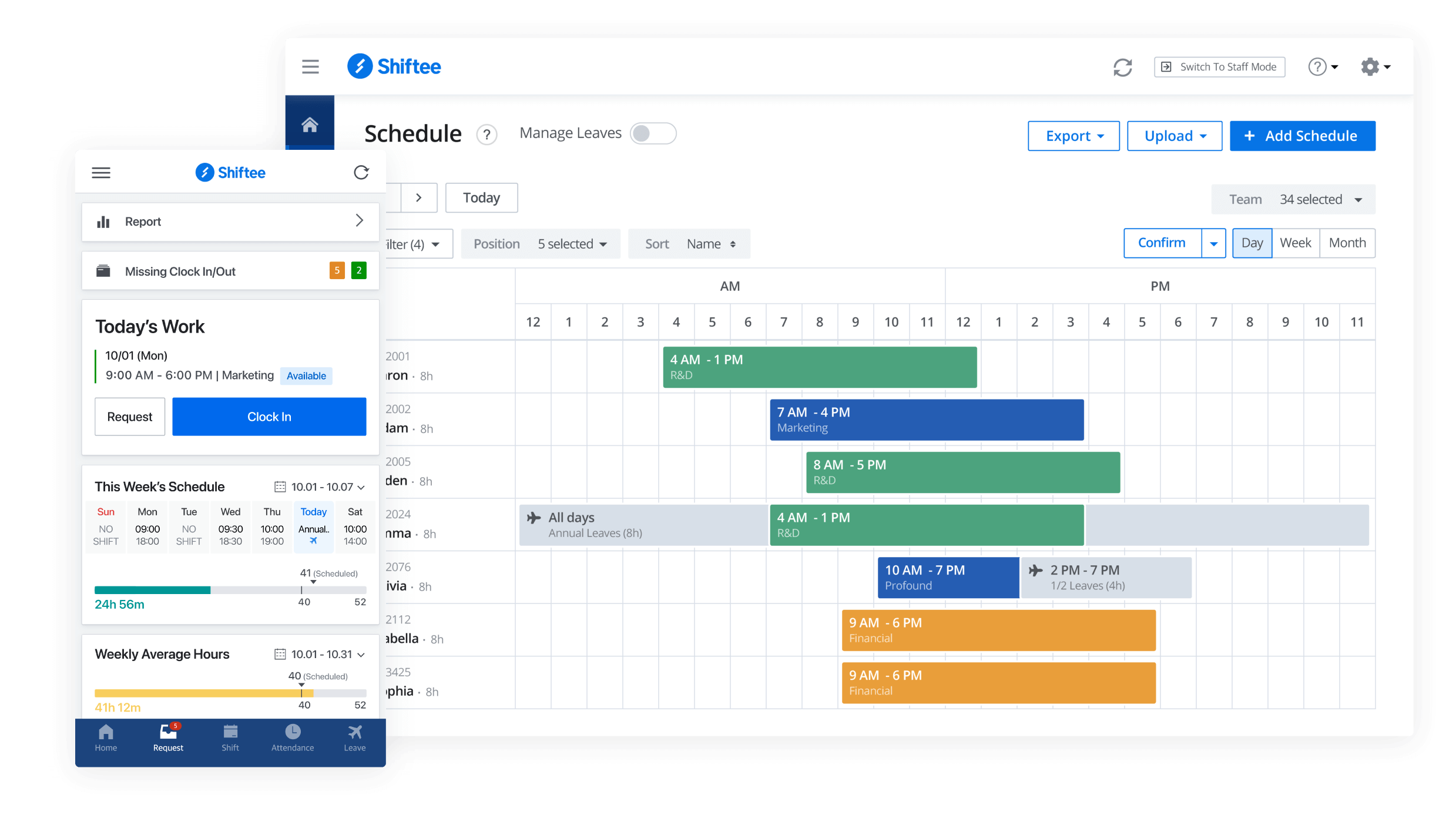
- Attendance management: Flexibly supports diverse work arrangements including clock-in/clock-out recording, schedule synchronization, automatic breaks deduction, field work management, and deemed working hour management.
- Leave management: Supports a wide range of leave policies — annual leave, half-day leave, compensatory leave, and hourly leave — with configurable automatic accrual rules to ensure efficiency and fairness in leave operations.
- Electronic approval workflows: Work schedule and leave requests, clock-in/clock-out edit requests, and other custom request processes are handled through electronic approval workflows, streamlining the manager approval process.
- Reporting and payroll calculation: Automates calculation of overtime, night shift, and holiday work hours, and provides customizable reports with the data needed to support HR strategy.
- Security and infrastructure integration
- ISO/IEC 27001 international information security certification.
- Data protection measures including AES-256 encryption, IP access controls, and audit logging.
- Location data collected for clock-in/clock-out purposes is checked on a one-time basis only and immediately deleted — ensuring personal information is protected.
- AWS-based infrastructure with real-time defense against DDoS attacks and malicious traffic, providing a stable and secure operating environment.
Organizational Culture Improvements: Shiftee in Practice
1. Operational Efficiency Gains at Service Company A
Operating in a mixed work environment with diverse work arrangements and employee types, Company A found that its existing groupware system was unable to adequately support flexible scheduling and remote work management. The attendance-centric approach made it difficult to create an environment that genuinely supported individual autonomy. After adopting Shiftee, clock-in/clock-out recording and remote work approvals were systematized through the mobile app, and real-time schedule sharing became possible — improving operational efficiency and creating an environment in which employee autonomy could be meaningfully supported.
2. Enabling Flexible Work at IT Company B
Company B had been operating a selective working hour scheme with core time hours, and had cultivated a culture where employees planned their own schedules independently. However, the systems in place were insufficient to support this approach. After adopting Shiftee, employees could set their own schedules freely and check their attendance data in real time — significantly improving the reliability of working hour records. The HR team was freed from manual verification work and was also able to improve the accuracy of overtime calculation.
Cloud-based HR systems are more than administrative tools — they are the infrastructure for building a healthy organizational culture founded on autonomy and trust. As a leading cloud-based HR platform, Shiftee brings together flexible work arrangement support, data-driven HR management, and a robust security framework — providing an optimized solution for the evolving world of work.
When citing the content, be sure to indicate the source according to copyright law.