Clock-In and Clock-Out Management and the Move to Integrated Attendance
2026-08-24

- Structural Limitations of Using a Single Authentication Method for Attendance Records
- Why Clock-In and Clock-Out Records and Attendance Data Should Be Managed Together
- Checklist for Integrating Attendance Data with Clock-In and Clock-Out Records
- Shiftee: Connecting Attendance Data in One Workforce Management Solution
Clock-in and clock-out records are the starting point for attendance data used in working time calculations, overtime, night and holiday work management, leave administration, and payroll processing. Many companies use a single authentication method such as NFC to record attendance, but as work environments become more complex with multiple locations, offsite work, and remote work, organizations are increasingly considering how to expand their operating framework.
What matters most is not the authentication method itself, but how attendance data, including clock-in and clock-out records, is connected and managed within a single framework. In this article, we look at why organizations may need to move toward integrated attendance data management and review the key checklist items to consider.
Structural Limitations of Using a Single Authentication Method for Attendance Records
When clock-in and clock-out records rely on a single authentication method such as NFC, the scope of management also expands as work arrangements and workplace structures become more diverse. As organizations grow and work arrangements vary, separating clock-in and clock-out records from the broader attendance management framework can create the following structural limitations.
First, when clock-in and clock-out records are managed separately from the attendance management system, the overall process can become disconnected. Records may be available, but additional verification may be required to compare them with work schedules, distinguish overtime, night work, and holiday work, and apply maximum working-hour rules.
Second, authentication settings and management requirements become more complex in environments with multiple workplaces or work locations. When different working conditions apply by organization or branch, the number of authentication settings and exceptions can increase, turning what was initially a simple structure into one that requires more detailed configuration.
Third, as hybrid work arrangements such as offsite and remote work become more common, a single authentication method may not be sufficient to reflect every work environment under the same standards. For office employees in particular, if PC usage time records and clock-in and clock-out records are managed separately, additional alignment may be required when determining actual working hours.
Why Clock-In and Clock-Out Records and Attendance Data Should Be Managed Together
-
Improve the accuracy of working time calculations
Attendance management connects clock-in and clock-out records with work schedules, working time categories, leave data, and calculation standards. Connecting clock-in and clock-out records with work schedules and calculation rules can help reduce errors in working time calculations and maintain clear, consistent standards. -
Clarify management standards and responsibilities
Location and WiFi authentication are methods for verifying clock-in and clock-out activity, while attendance management also includes approval steps, change histories, working time aggregation, and calculation standards. Managing records and administrative processes within a single framework helps clarify how working hours are determined and how management responsibilities are assigned. -
Support organizational growth and hybrid work environments
Work arrangements become more diverse when organizations operate multiple workplaces and combine offsite and remote work. An integrated management framework allows organizations to maintain the same operating flow as workplaces and work arrangements expand, without creating separate management structures for each environment.
Checklist for Integrating Attendance Data with Clock-In and Clock-Out Records
When integrating attendance data around clock-in and clock-out records, companies should look beyond whether attendance can simply be recorded. They should also review how work schedules, working time calculations, approval histories, and payroll systems are connected. Companies evaluating an attendance management system should review the following areas based on their actual operating requirements.
1. Connection Between Clock-In and Clock-Out Records and Work Schedules
Check whether clock-in and clock-out records are connected with work schedules and reflected in working time calculations. Standards for identifying late arrivals and early departures, break deductions, and allowed differences between scheduled and recorded times should also be applied consistently.
2. Support for Multiple Authentication Methods
If the organization currently relies on a single authentication method, check whether location authentication and WiFi authentication can be used together. It is also advisable to confirm whether authentication methods can be configured differently by organization or branch. Supporting different configurations across work environments can provide greater operational flexibility.
3. Working Time Calculation Rules and Maximum Working-Hour Settings
Check whether overtime, night work, and holiday work are managed according to predefined rules and whether maximum working-hour limits can be configured in the system. A structure for comparing approved working hours with actual clock-in and clock-out records is also important for maintaining clear working time calculation standards.
4. Approval settings and Change History Management
Check whether requests to change clock-in and clock-out records, update work schedules, or apply for overtime can be managed through configured approval settings. Maintaining request histories and record changes helps organizations establish clear internal management standards.
5. ERP, Workflow, and Data Download Integration
Review whether attendance data can be integrated with ERP systems and used for payroll and working time calculations through Open API connections or Excel downloads. It is also important to confirm that the relevant data fields and integration methods used for payroll processing can be clearly configured.
Shiftee: Connecting Attendance Data in One Workforce Management Solution
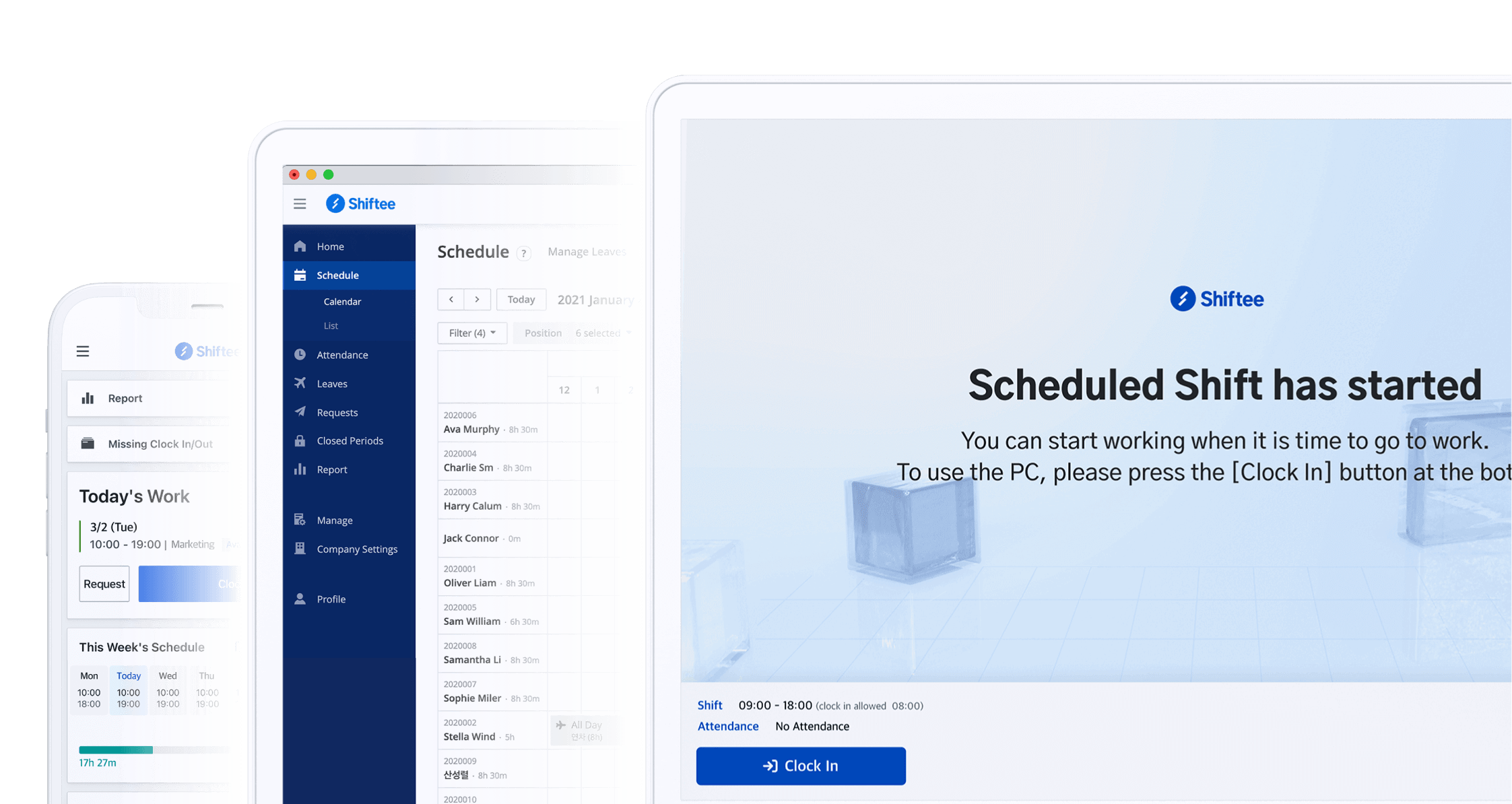
1) Clock-In and Clock-Out Management with Multiple Authentication Methods
Shiftee supports clock-in and clock-out records using location and WiFi authentication, while PC-OFF can restrict PC use according to planned work schedules. Authentication methods can also be configured by team or branch to support different employee groups and work environments, including field, offsite, and office-based work.
2) Working Time Management Connected with Work Schedules
Clock-in and clock-out records can be managed together with work schedules, with settings for identifying late arrivals and early departures and applying break deductions. Overtime, night work, and holiday work can also be managed according to predefined rules, allowing organizations to reflect their working time policies in system settings.
3) Approval settings and Change History Management
Work schedule changes, overtime requests, and requests to change clock-in and clock-out records can be managed through configured approval settings. Request histories and record changes can be reviewed together, helping organizations systematically manage the reasons for attendance record changes and their approval histories.
4) Maximum Working-Hour Settings
Maximum working-hour rules can be managed through system settings, and additional work requests can be restricted when predefined limits are exceeded.
5) ERP, Open API, and Excel Data Integration
Attendance data can be integrated with ERP systems or connected with external systems through Open API. Data can also be downloaded in Excel format for payroll and working time calculations. Organizational structures and workplace configurations can likewise be reflected and managed through system settings.
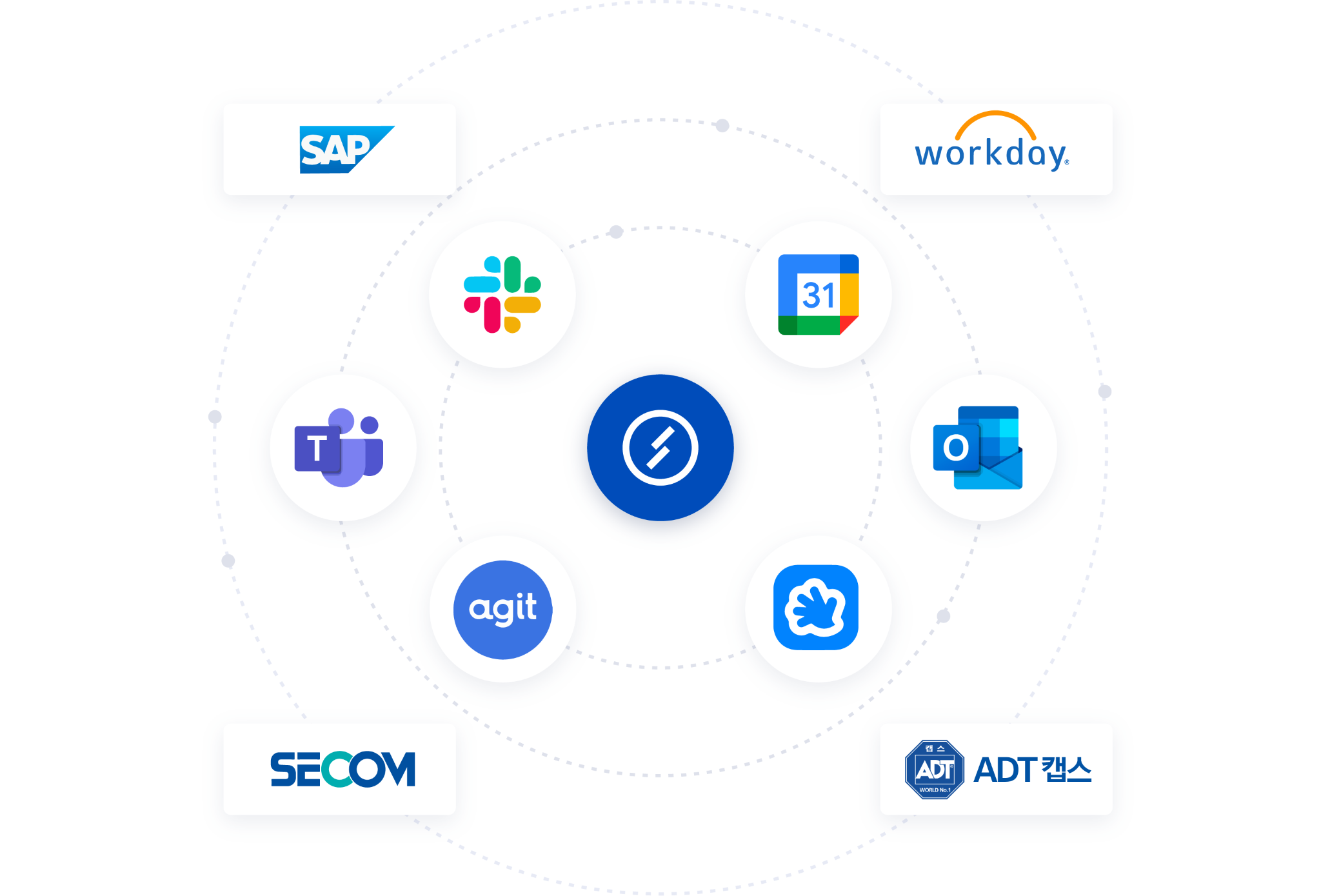
Clock-in and clock-out records are the starting point of a management framework that connects working time records with calculation standards. As business operations become more complex, organizations need a structure that connects clock-in and clock-out records, work schedules, working time calculations, approval processes, and external system integrations within a single operating flow.
Shiftee supports clock-in and clock-out management using location authentication, WiFi authentication, and PC-OFF, along with work schedule-based working time management, approval rules, request change histories, ERP integration, and Open API connectivity. This allows organizations with multiple locations and hybrid work arrangements to manage working time records and calculation standards according to predefined settings.
If your organization currently relies on a single authentication method for clock-in and clock-out records, consider reviewing how Shiftee's integrated workforce management environment can help bring attendance data together within a framework suited to your work environment.
When citing the content, be sure to indicate the source according to copyright law.