Part-Time Attendance Records & Data Migration Checklist
2026-08-28

Managing clock-in and clock-out records is an important operational task for workplaces that employ part-time workers. In industries with large hourly workforces, such as food service, retail, and other service businesses, accurate working time records and a structured data management framework are fundamental to HR operations. Working time records are used not only as the basis for payroll calculations but also to review work histories, plan workforce operations, and establish internal management standards.
More companies are now moving from paper attendance sheets or Excel-based processes to cloud-based attendance management systems. As part of this transition, organizations are also paying greater attention to how existing clock-in and clock-out data should be retained and migrated. Maintaining continuity in historical working time records is particularly important for companies operating multiple stores or expanding their workplaces.
Managing attendance for part-time employees requires consistent standards for both working time records and data retention. When migrating data, it is advisable to review the accuracy of records, retention periods, and how the data will be used. In this article, we outline key standards for managing clock-in and clock-out records for part-time employees, record retention principles to consider in attendance management, and a checklist for data migration.
Clock-In and Clock-Out Management and Record Retention for Part-Time Employees
Clock-in and clock-out records are fundamental data for managing attendance for part-time employees. Beyond simply confirming when employees start and finish work, these records serve as key information for establishing a workplace's working time management framework. It is therefore advisable to maintain clock-in and clock-out records consistently according to defined standards.
In practice, it is important to record clock-in times, clock-out times, break times, and actual working hours consistently. Operating practices may vary by workplace, but applying the same standards can reduce confusion in working time calculations and improve management efficiency.
Part-time employees also often work under a variety of arrangements, including shift work, short-hour schedules, and weekend work. In these environments, it is advisable to manage planned work schedules together with actual clock-in and clock-out records. Comparing planned schedules with actual records provides a more structured view of workforce operations.
It is also advisable to maintain clock-in and clock-out records in a way that preserves change histories. When records need to be corrected, being able to review what was changed helps maintain reliable data and supports future record reviews.
Retention Periods and Data Migration Considerations for Part-Time Attendance Records
Even when using an attendance management system for part-time employees, it is advisable to establish a separate framework for retaining clock-in and clock-out records. In particular, companies should review how existing data will be migrated in advance when changing attendance management systems or reorganizing workplace operations.
When preparing for data migration, it is recommended to review the following items first.
| Item | What to Check |
|---|---|
| Employee information | Whether employee IDs, names, and organization information match |
| Work schedule data | Whether work arrangement and schedule information will be retained |
| Clock-in and clock-out records | Whether clock-in and clock-out times and change histories are included |
| Leave data | Whether leave usage histories and remaining balances are included |
| Excel backup | Whether a separate copy of the original data is retained |
| Permission settings | Whether administrator and approver information will be migrated |
During data migration, it is important to review the data structure rather than simply transferring files. For example, if work arrangements differ by workplace or the organizational structure has changed, companies should confirm that existing data aligns with the structure of the new system.
It can also be helpful to determine in advance how much historical data needs to be retained. Rather than migrating all available data, prioritizing the information most likely to be used can make the migration process more efficient.
For larger workplaces or companies operating multiple locations, it is advisable to conduct a test migration first to check for missing data before completing the full migration. This can help maintain continuity in working time records while supporting a smooth transition to the new operating environment.
Managing Attendance for Part-Time and Hourly Employees with Shiftee
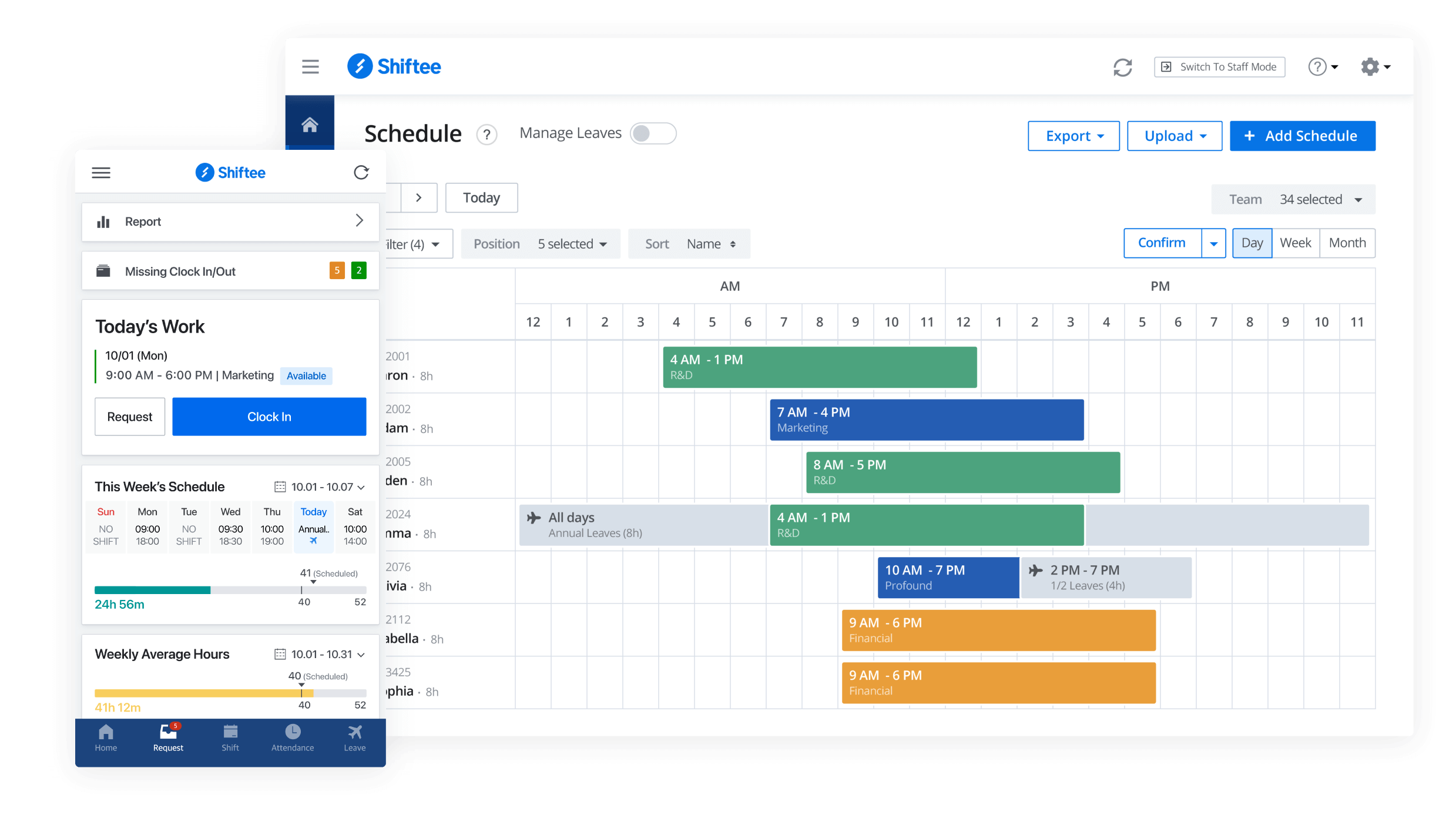
Attendance management for part-time employees should bring together work schedules, clock-in and clock-out records, and working time records. For workplaces with large hourly workforces in particular, accurate attendance data and efficient management are key to HR operations. Shiftee supports work schedules, clock-in and clock-out records, workflow-based requests and approvals, and working time calculations within a single system.
1. Work Schedule Management
Part-time and hourly employees often have variable working hours, making structured work schedule management important. Shiftee supports daily, weekly, and monthly calendar-based work schedules and allows organizations to manage different work arrangements using schedule patterns. Work schedules across stores and branches can be managed in one place, making the system suitable for workplaces with frequent shift work or short-hour schedules.
2. Clock-In and Clock-Out Management
Clock-in and clock-out records for part-time employees provide the basis for calculating actual working hours. Shiftee supports clock-in and clock-out records using location or WiFi authentication and allows multiple workplaces to be configured by team or branch. It also supports one-to-one mobile device assignment for each employee to help prevent proxy clock-ins and enables organizations to manage attendance records according to workplace-specific operating standards.
3. Workflow-Based Clock-In and Clock-Out Record Management
Missing or incorrect clock-in and clock-out records can occur in workplaces with part-time employees. Shiftee supports requests to create or change clock-in and clock-out records, while workflow can be used to manage requests and approvals related to attendance records, work schedules, and leave. Approval rules and approval steps can also be configured by team and position, allowing companies to establish approval processes that reflect their workplace operations.
4. Attendance Status and Working Time Calculations
Managing planned work schedules together with actual clock-in and clock-out records provides a more structured view of attendance status. Shiftee supports comparisons between planned schedules and actual records to identify attendance status such as late arrivals, early departures, and absences. Approved working hours can also be compared with actual working hours, supporting attendance management and working time reviews for part-time employees.
5. Excel Downloads and Data Management
Clock-in and clock-out data is often used for payroll processing and HR operations. Shiftee supports Excel downloads of attendance records and payroll data. Employee information and attendance data can be managed together, while working time data can be used for payroll processing.
Managing clock-in and clock-out records for part-time employees goes beyond maintaining basic records. It is part of establishing a structured working time management framework for the workplace. Consistent recording standards improve the usability of attendance data and support more efficient workforce operations.
When changing attendance management systems or expanding workplace operations, it is particularly advisable to prepare a data migration plan in advance. Reviewing key information such as employee data, work schedules, clock-in and clock-out records, and leave data and establishing a backup framework can support a smoother transition to the new operating environment.
Shiftee supports attendance management and data migration for part-time employees by bringing work schedules, clock-in and clock-out records, workflow-based requests and approvals, and working time calculations together within a single system. Excel downloads of attendance records and payroll data also support a structured approach to data management.
When citing the content, be sure to indicate the source according to copyright law.