Optimizing Shift Scheduling for Efficient Store Operations
2026-08-18

Store staffing needs can vary significantly on weekends, public holidays, and during promotional periods. A store that is relatively quiet on a weekday afternoon may suddenly have customers waiting in line at certain times, while on other days, fewer visitors than expected may leave more staff on duty than needed. In these situations, the challenge for many stores is not simply workforce scheduling itself, but the working time calculations that follow.
Frontline workforce management is not just about creating schedules. It also requires accurately managing differences between actual working hours and planned schedules. As store workforce management becomes more complex, discrepancies can arise in shift management and working time calculations, affecting payroll data preparation and reporting to headquarters. In many cases, the operational burden comes less from creating schedules than from uncertainty in working time calculations.
In this article, we explore workforce scheduling strategies for improving store operations, ways to optimize shift management, and practical approaches to reducing the administrative burden of working time calculations.
Challenges of Excel-Based Scheduling for Store Workforce Management
Many stores still use Excel for workforce scheduling. While spreadsheets may seem convenient at first, managing change histories and aggregating working hours becomes more complicated when staffing needs vary frequently by store. In stores that rely on shift work, schedule changes, replacement shifts, and overtime can also require manual comparisons between planned schedules and actual working hours.
Excel-based frontline workforce management has several structural limitations.
- Changes in staffing demand by store can be difficult to reflect promptly.
- As shift changes accumulate, discrepancies can become more likely during final working time calculations.
- For companies operating multiple stores, it can be difficult to consolidate, compare, and analyze workforce data across locations.
As a result, greater complexity in workforce scheduling can make it more difficult to maintain accurate working time data, which may reduce operational efficiency.
3 Principles for Consistent Store Workforce and Shift Management
Improving store operations requires a more structured approach to workforce scheduling. The following three principles are particularly important for businesses where shift management plays a central role.
First, planned work schedules and actual clock-in and clock-out records should be managed separately. Keeping planned schedules distinct from actual attendance records and comparing the two makes it easier to identify discrepancies. This helps establish clearer operating standards for frontline workforce management and can reduce the administrative burden of working time calculations.
Second, responsibilities and permissions should be clearly defined at the store level. Store managers should be able to adjust schedules, while headquarters should be able to manage operations based on consolidated workforce data across stores. For locations with frequent shift changes, clear approval processes and change histories are especially important.
Third, working time aggregation standards should remain consistent. Separately managing overtime, night work, and holiday work and standardizing workforce scheduling rules across stores makes data easier to compare and analyze. Over time, this also helps maintain consistent operating standards across locations.
Shift Management Checklist and Practical Guide for Store Workforce Management
A key part of store workforce management is reducing discrepancies in shift operations. With Shiftee, organizations can manage work schedules separately from clock-in and clock-out records and configure schedule patterns by store to structure shift management more systematically.
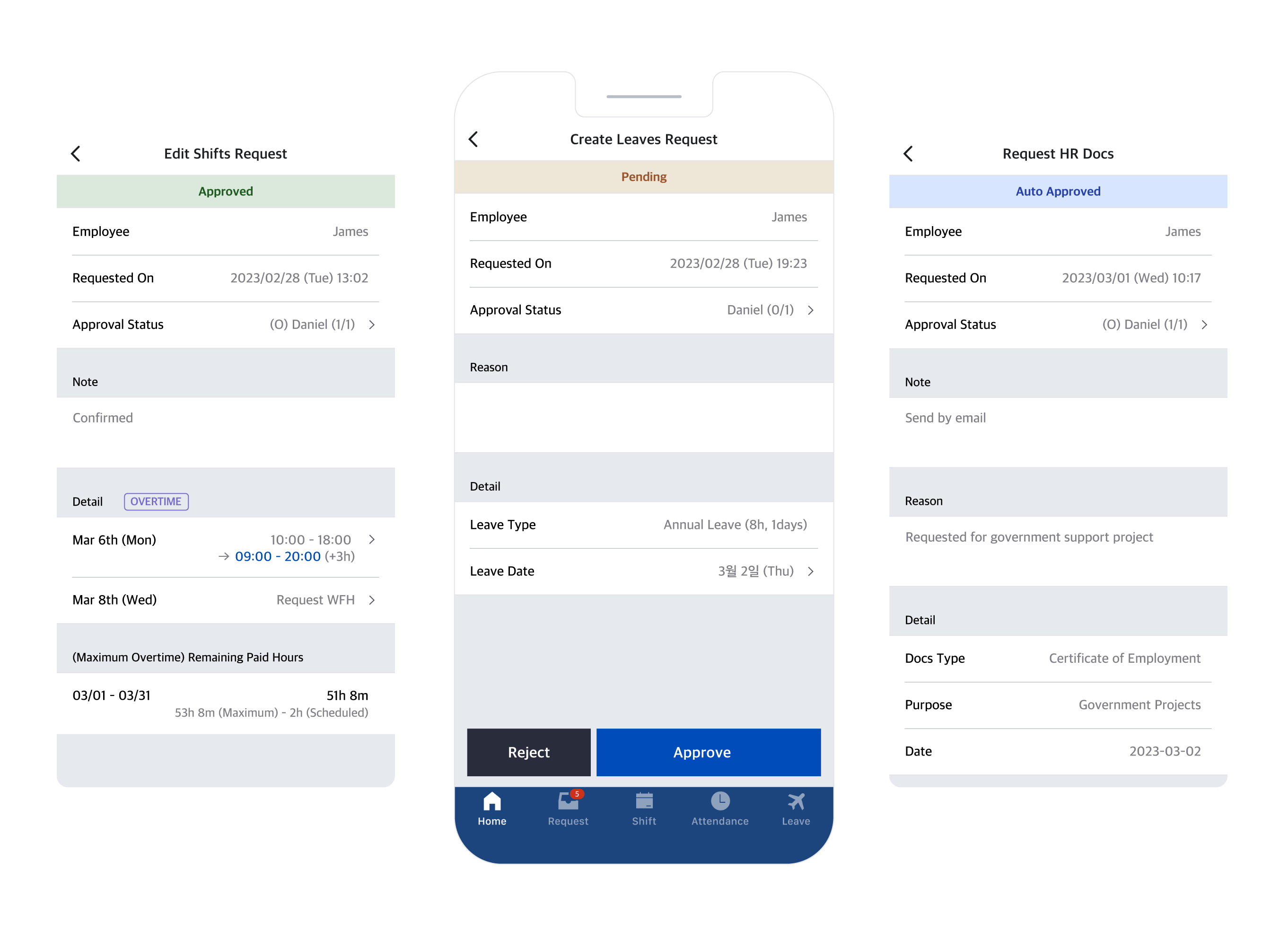
1. Work Schedules and Schedule Pattern Management
Recurring shifts can be managed systematically by store using schedule patterns. Approval settings can also be configured for requests to create, change, or delete work schedules, helping organizations maintain clear change histories for shift schedules. Leave usage can also be managed by leave type, including full-day leave, half-day leave, and hourly leave, helping maintain consistent standards across work schedules and leave management.
2. Comparing Clock-In and Clock-Out Records with Work Schedules
Clock-in and clock-out records can be compared with planned work schedules to identify differences between scheduled and actual working times and calculate working hours more accurately. Overtime, night work, and holiday work can also be aggregated separately, helping maintain consistent working time calculations and support accurate payroll processing.
3. Organization- and Store-Level Access Permissions
When access requirements differ by store, data access can be configured based on administrator permissions to distinguish the management scope of store managers from that of headquarters. This allows companies operating multiple stores to manage workforce data across locations within a unified structure.
4. Break Deduction Settings
Break deduction rules can be configured based on total working hours, helping maintain consistent working time management even in shift-based environments. This provides a clearer basis for calculating actual working hours after store schedules have been created.
5. Working Time Reports and Data Downloads
Overtime, night work, and holiday work can be organized based on approved or actual working hours, while attendance data can be downloaded in Excel format for store payroll processing. This allows organizations to maintain consistent standards from shift management through working time calculations.
Store operations always require flexibility. Sales can vary depending on weather, location, promotions, and the day of the week, and workforce schedules need to be adjusted accordingly. However, maintaining consistency in working time data is just as important as responding quickly to changes in demand. Without a structured approach to store workforce and shift management, flexible scheduling alone will not reduce the administrative burden of working time calculations.
With Shiftee, frontline workforce management can be operated based on consistent data, making it easier to identify differences between planned schedules and actual working hours and standardize workforce scheduling practices across stores. Work schedules, clock-in and clock-out records, and working time aggregation can all be managed within a single framework, helping reduce discrepancies in shift management and maintain consistent workforce data across locations.
If you are looking to improve your store workforce management framework, consider reviewing your working time management structure first to ensure data consistency before expanding scheduling flexibility.
When citing the content, be sure to indicate the source according to copyright law.