Integrating Access Control Systems with Working Time Management
2026-07-09

Many companies still operate access control systems and attendance management systems separately. This is largely because access control systems are often introduced first for security and entry management, with separate attendance management systems added later as the need for working time management grows.
However, as flexible work arrangements, shift work, multi-location operations, and compliance with prescribed working-hour limits become more common, access records alone are often insufficient for accurately calculating working hours. As a result, more companies are looking to integrate access control systems and centralize working time data.
Today, we will look at the structural differences between access records and working time management, and explore strategies for centrally managing working time data through access control system integration.
Limitations of Managing Access Records and Working Time Separately
Access records are security-focused data that capture entry and exit events at specific points in time. Working time management, by contrast, requires working hours to be calculated based on work schedules, break times, scheduled working hours, and overtime, night work, and holiday work.
When the two systems are operated separately, HR teams must repeatedly process access records, compare them with work schedules, and recalculate working hours. In shift-based environments in particular, entry times may not always match actual work start times, which can lead to discrepancies. An attendance management structure built around access control system integration is therefore being considered as a practical way to address these limitations.
Centralizing Working Time Data Through Access Control System Integration
Access control system integration is not simply about connecting data. The key is to compare access data with work schedules and incorporate it into the working time calculation process.
For example, companies can integrate with access control systems such as S1 (SECOM) or ADT Caps while keeping their existing clock-in and clock-out methods and connecting the resulting data with attendance management. What matters most, however, is not the integration itself but how the data flow is designed afterward.
A practical data flow after integrating an access control system may include the following steps.
① Access event occurs
② Data is connected to the attendance management system
③ Data is compared with work schedules
④ Break times are deducted
⑤ Working hours are calculated
⑥ Requests and approvals are processed, and working hours are finalized
⑦ Reports are used for HR operations
Practical Checkpoints for Access Control System Integration
When considering access control system integration, it is advisable to establish several operational standards in advance. In particular, companies should view access control integration not simply as a technical connection, but as an opportunity to redefine their working time management standards.
First, companies need to determine whether access times should be treated as actual work start times or whether a defined tolerance should be applied.
Second, the applicable method should be differentiated by work arrangement. Office employees, production workers, field employees, and remote workers have different work patterns, so applying the same standard to every group may not always be appropriate.
Third, predefined standards for overtime, night work, and holiday work should be clearly established, with the system configured to restrict requests when those standards are exceeded.
Integrated Attendance Management with Shiftee and Access Control System Integration
Shiftee is designed to integrate access control data into work schedule management and working time calculations so that the data can be used consistently within a single attendance management framework.
1. Support for Integration with External Access Control Systems
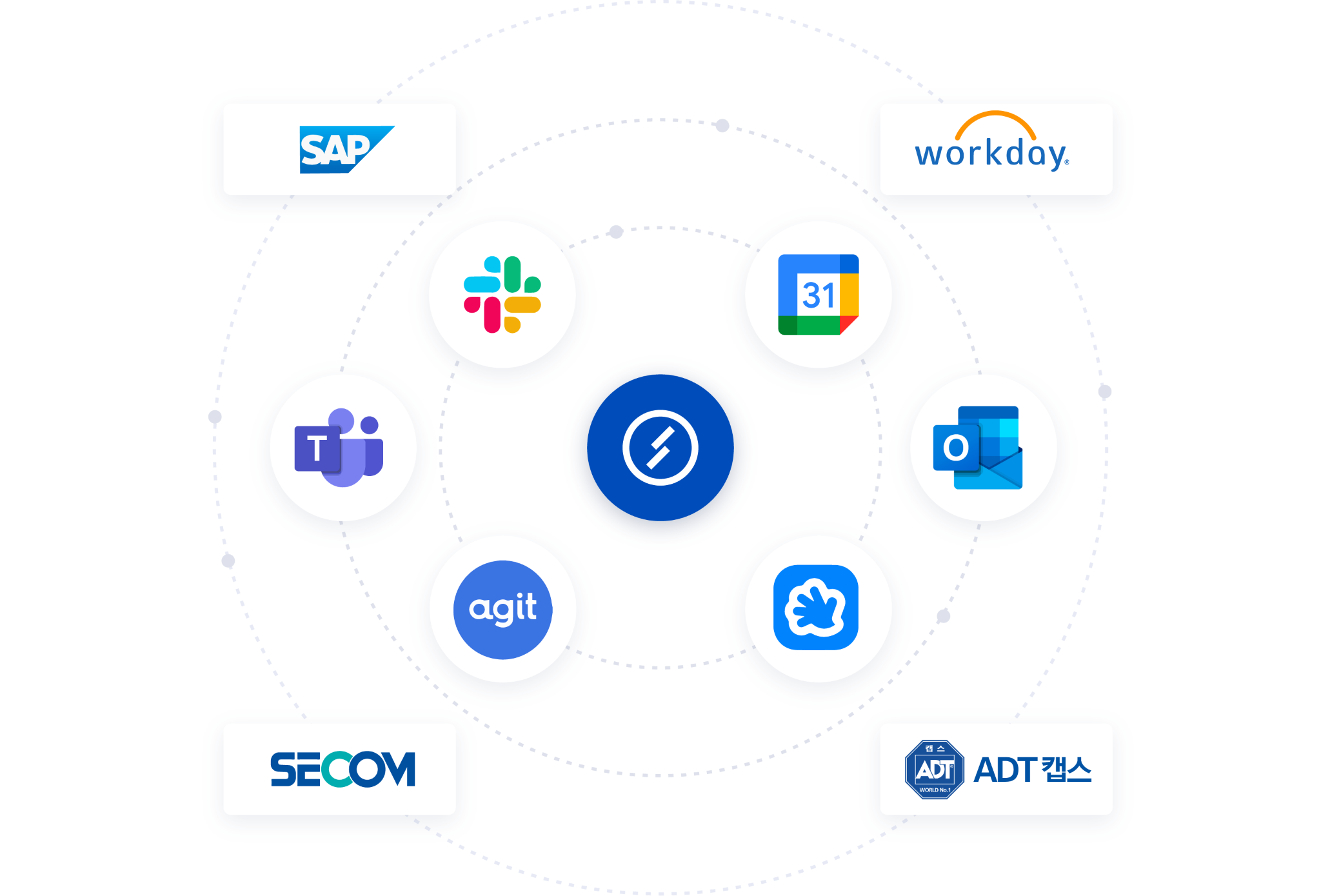
Shiftee can integrate with access control systems such as S1 (SECOM), ADT Caps, and KT Telecop, allowing companies to manage attendance data in Shiftee while maintaining their existing clock-in and clock-out methods. This enables access data to be used within the attendance management framework without replacing existing clock-in and clock-out devices.
2. Compare Access Data with Actual Work Schedules
Shiftee provides daily, weekly, and monthly calendar views and supports various work arrangements and schedule patterns. By comparing attendance records with work schedules, companies can manage exceptions such as lateness and early departure, extending basic access records into a broader working time management framework.
3. Define Working Time Calculation Rules with Break Deduction Settings
Break times can be deducted based on total working hours or specific time periods, while manual break settings and records can also be applied to individual employees. This allows companies to define clearer standards between access times and approved working hours.
4. Manage Attendance Record Changes and Overtime Requests Through Workflow
Approval rules can be configured by organization and role, while request restrictions can also be applied under specific conditions. Employees can submit requests for attendance record changes as well as overtime, night work, and holiday work through workflow, and managers can review and approve or reject those requests within Shiftee. Because access data and working time adjustments are managed together, companies can establish a more structured process for reviewing and approving working time changes.
5. Working Time Calculation and Reporting
Shiftee supports calculations for average working hours by day, week, and month, overtime management, and custom report settings, allowing companies to organize working time data from access records into various report formats. The resulting working time data and reports can also support more efficient payroll processing.
Integrating an access control system is more than adding another feature. It can serve as a starting point for reorganizing how a company manages working time data. Centralizing working time data through access control integration can reduce repetitive HR work and provide a more reliable data foundation for management decisions.
Shiftee supports flexible access control integration through work schedule management, configurable break deduction rules for working time calculations, workflow-based attendance record changes and overtime, night work, and holiday work requests, and working time calculation and reporting features.
If you are looking to improve your attendance management framework, consider using Shiftee and access control system integration as the starting point for a more integrated data structure.
When citing the content, be sure to indicate the source according to copyright law.