Understanding Taiwan's Labor Standards Act (勞動基準法)
2025-12-11
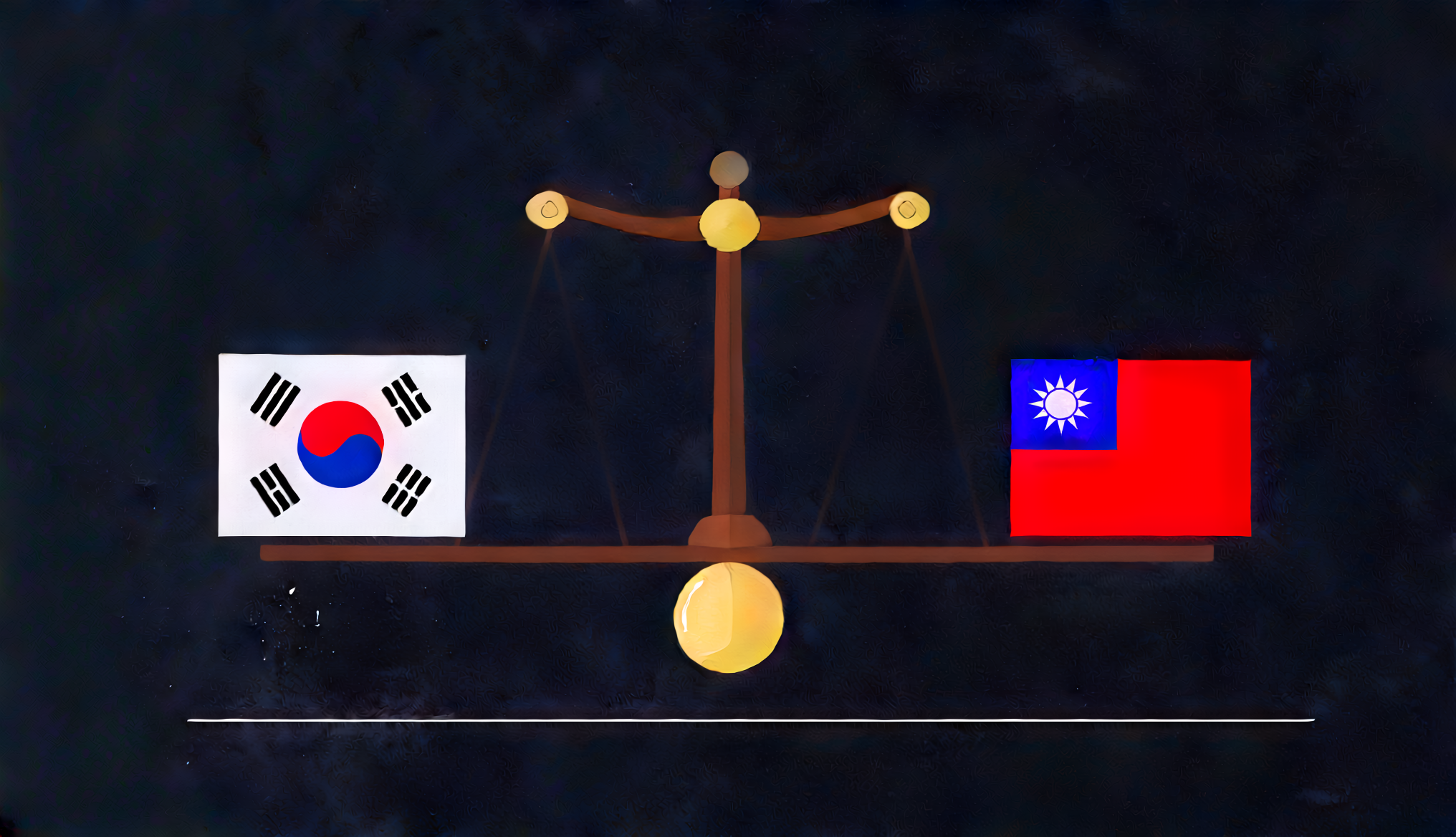
- Comparing Working Hours: Korea and Taiwan
- Comparing Key Provisions: Annual Leave, Minimum Wage, and Pay Differentials
- The Core of Taiwan's Attendance Management: Mandatory Clock-In/Clock-Out Recording
- HR Management Challenges in Taiwan and Key Checkpoints for Korean HR Managers
- Global HR Challenges and How to Address Them
Taiwan is frequently cited as a country with labor regulations similar to Korea's. Both countries set the standard working week at 40 hours and the standard working day at 8 hours, and neither allows total daily working hours — including overtime — to exceed 12 hours.
This article compares the core provisions of Korea and Taiwan's labor standards legislation — covering working hours, annual leave, and minimum wage — to identify what the two frameworks share and where they differ. It also examines HR management practices at Taiwan-based companies, highlighting the key issues and considerations relevant to HR managers at both domestic Korean organizations and global businesses operating across borders.
Comparing Working Hours: Korea and Taiwan
Under Article 50 of Korea's Labor Standards Act, the statutory working week is 40 hours and the statutory working day is 8 hours. Article 53 permits up to 12 hours of overtime per week, establishing a clear cap of 52 hours per week.
Both Korea and Taiwan set the same statutory baseline: 40 hours per week and 8 hours per day.
Under Article 30 of Taiwan's Labor Standards Act (勞動基準法), the same 40-hour week and 8-hour day apply. Where labor-management agreement exists, up to 2 hours may be redistributed from one working day to another — but total weekly working hours may not exceed 48 hours under this arrangement.
Article 32 further specifies that daily working hours may not exceed 12 hours, and monthly overtime is capped at 46 hours as a baseline, extendable to 54 hours by labor-management agreement, with a three-month cumulative cap of 138 hours.
In summary: Korea explicitly legislates a 52-hour workweek, while Taiwan does not use this terminology directly. However, Taiwan's overtime and working hour redistribution provisions combine to produce an effective maximum of approximately 52 hours per week in practice.
Comparing Key Provisions: Annual Leave, Minimum Wage, and Pay Differentials
Both Korea and Taiwan's labor standards legislation sets out detailed requirements for minimum wage, annual leave, public holidays, and various pay differentials.
On annual leave, Korea's Labor Standards Act Article 60 guarantees 15 days of paid annual leave for employees with one or more years of service. After three years of continuous employment, one additional day is added for every two years of service, up to a maximum of 25 days.
Taiwan's system is more granular. Under Article 38 of Taiwan's Labor Standards Act, paid annual leave is tiered by length of service as follows: 3 days from 6 months, 7 days from 1 year, 10 days from 2 years, 14 days from 3 years, 15 days from 5 to 10 years, and from year 11 onward, one additional day per year of service — up to a maximum of 30 days.
Taiwan Labor Standards Act Article 38 — Annual Leave (勞工之特別休假)
| Length of Service | Paid Leave Entitlement |
|---|---|
| 6 months to less than 1 year | 3 days |
| 1 year to less than 2 years | 7 days |
| 2 years to less than 3 years | 10 days |
| 3 years to less than 5 years | 14 days |
| 5 years to 10 years | 15 days |
| From year 11 onward | +1 day per year (up to 30 days) |
Source: 勞動基準法 (民國 113 年 07 月 31 日修正)
Minimum wage is set and announced annually by each government. In Korea, the minimum hourly wage is KRW 10,030 in 2025, rising to KRW 10,320 in 2026. In Taiwan, the minimum hourly wage is NT$190 in 2025, with an increase to NT$196 planned for 2026.
Source: Focus Taiwan
The two countries also differ in their approach to overtime, night shift, and holiday pay. Under Article 56 of Korea's Labor Standards Act, employers must pay a premium of at least 50% of the regular wage for overtime, night shift, and holiday work.
Taiwan's rules are more graduated. Under Articles 24 and 39 of Taiwan's Labor Standards Act, overtime up to 2 hours is compensated at a premium of at least one-third of the regular wage; beyond 2 hours, the premium rises to at least two-thirds. For holiday or unavoidable overtime work, employers must either pay double the regular wage or grant compensatory leave, subject to labor-management agreement.
Korea vs. Taiwan: Labor Standards at a Glance
| Category | Korea | Taiwan |
|---|---|---|
| Minimum wage | 2025: KRW 10,030/hour | 2025: NT$190/hour |
| 2026: KRW 10,320/hour | 2026: NT$196/hour — planned | |
| Paid annual leave | 15 days from 1 year of service; up to 25 days for long-service employees | Tiered by service length: 3 days from 6 months, 7 days from 1 year; up to 30 days maximum |
| Overtime, night shift, and holiday pay | At least 50% premium on regular wage for overtime, night shift, and holiday work | Overtime up to 2 hours: at least +1/3 of regular wage; beyond 2 hours: at least +2/3; holiday/public holiday: double pay or compensatory leave |
The Core of Taiwan's Attendance Management: Mandatory Clock-In/Clock-Out Recording
Unlike Korea, Taiwan legally mandates clock-in/clock-out recording as a core component of attendance management.
Article 30, Paragraph 5 of Taiwan's Labor Standards Act requires employers to record employees' clock-in and clock-out times daily to the minute, and to retain these records for five years (“雇主應置備勞工出勤紀錄,並保存五年”). Employees have the right to request copies of their records as needed.
Taiwan also treats the obligation to record clock-in/clock-out as the cornerstone of attendance management, with Chapter 4, Article 21 of the Enforcement Rules specifying the acceptable methods in detail. These include: Attendance Books, Time Cards, Time Clocks, Access Cards, Biometric Identification Systems, and Electronic Attendance Systems.
In short, Taiwan legally requires minute-level clock-in/clock-out accuracy through systematic attendance management — and these records serve as the foundational data for calculating working hours and overtime pay.
💡 Related article
- Key Concepts of Clock-in/out Records and Attendance Management: Practical Tips for HR Operations
- Choosing the Right Time Clock System for Your Business
HR Management Challenges in Taiwan and Key Checkpoints for Korean HR Managers
As outlined above, Taiwan legally mandates minute-level clock-in/clock-out recording with a five-year retention requirement — and specifies the acceptable methods for doing so. Despite these clear requirements, many Taiwan-based companies identify working hour and attendance record management as their greatest HR challenge in practice. Some organizations face fines for failing to comply consistently, due to staffing constraints or inadequate systems.
A further challenge is the complexity of overtime and holiday pay calculation. Because Taiwan applies different premium rates depending on the time period, HR managers who miss a nuance in the regulations risk underpaying wages. The tiered annual leave system — differentiated by years of service — is also frequently cited as difficult to calculate and administer accurately.
While these issues might appear to be Taiwan-specific, they are equally relevant to Korean organizations expanding internationally or operating under local regulations in foreign markets. Korean HR managers should ensure they have a clear understanding of global standards in foundational areas — working hour management, attendance recording, overtime and holiday pay calculation, and annual leave administration.
Global HR Challenges and How to Address Them
The most significant challenge in global HR management is navigating labor laws and attendance regulations that vary by country. Korea explicitly legislates a 52-hour workweek; Taiwan arrives at the same effective limit through its overtime and working hour redistribution provisions. Taiwan also enforces strict attendance management obligations — legally requiring minute-level clock-in/clock-out records to be maintained for five years.
These regulatory differences can place a substantial burden on HR managers. To manage complex workforce operations and ensure compliance, many organizations in Taiwan and beyond — including Korean companies with global operations — are turning to B2B SaaS-based attendance and working hour management solutions.
Purpose-built attendance management solutions are designed to be configured flexibly in line with the legal requirements of each country, making them a practical and effective tool for HR practitioners managing international workforces or overseeing overseas expansion.
Recent research indicates that working hour management is the HR function Taiwan-based companies find most challenging. This is a challenge that Korean organizations face too, as staggered hours, remote work, and other flexible arrangements continue to grow.
Given that both countries face similar difficulties, the most important step is to develop a thorough understanding of each country's labor laws and regulations — and to build an attendance management framework on that foundation. In today's environment, HR managers who proactively use dedicated attendance management solutions to catch the details they might otherwise miss are best positioned to stay ahead.
When citing the content, be sure to indicate the source according to copyright law.